
IRAs & Tax-Advantaged Accounts
-

The Roth Conversion Ladder (2026): The Early-Retirement Tax Strategy, Step by Step
Read more: The Roth Conversion Ladder (2026): The Early-Retirement Tax Strategy, Step by StepThe Roth conversion ladder is the strategy that lets early retirees tap their retirement accounts years before age 59½ without the 10% penalty, while paying tax at their lowest-ever rates. Here is how the ladder works, the all-important 5-year rule, how to use the 2026 brackets and standard deduction to convert cheaply, the ACA and…
-

Required Minimum Distributions (RMDs) 2026: Age 73/75 Rules, Tables and the Penalty
Read more: Required Minimum Distributions (RMDs) 2026: Age 73/75 Rules, Tables and the PenaltyRequired minimum distributions are the IRS’s way of finally taxing the retirement savings you have deferred for decades, and SECURE 2.0 changed the rules. Here is who must take an RMD in 2026, the age 73 and 75 thresholds, how to calculate the amount, the costly first-year timing trap that catches new retirees, and the…
-

Inherited IRA Rules 2026: The SECURE Act 10-Year Rule Explained
Read more: Inherited IRA Rules 2026: The SECURE Act 10-Year Rule ExplainedIf you have inherited an IRA, the rules changed dramatically under the SECURE Act. Most non-spouse beneficiaries must now empty the account within 10 years, and since 2025 many also face annual required withdrawals along the way. Here is exactly who the 10-year rule applies to, who is exempt, how Roth IRAs differ, and how…
-

Triple Tax-Advantaged Accounts: The Complete US Guide (HSA, and What Else Counts)
Read more: Triple Tax-Advantaged Accounts: The Complete US Guide (HSA, and What Else Counts)The HSA is the only mainstream US account with three layers of tax protection. Why Roth IRAs, traditional 401(k)s, and 529 plans don’t count, what the 2026 HSA contribution limits are, and the investment-HSA strategy that turns it into a stealth retirement account.
-

529 to Roth IRA: The 15-Year Rule Explained (2026)
Read more: 529 to Roth IRA: The 15-Year Rule Explained (2026)The most-asked question on the new 529-to-Roth IRA rollover route: how does the 15-year rule actually work? A focused FAQ covering the 15-year clock, the 5-year contribution exclusion, the $35,000 lifetime cap, the beneficiary-change uncertainty, and a worked planning example for 2026.
-
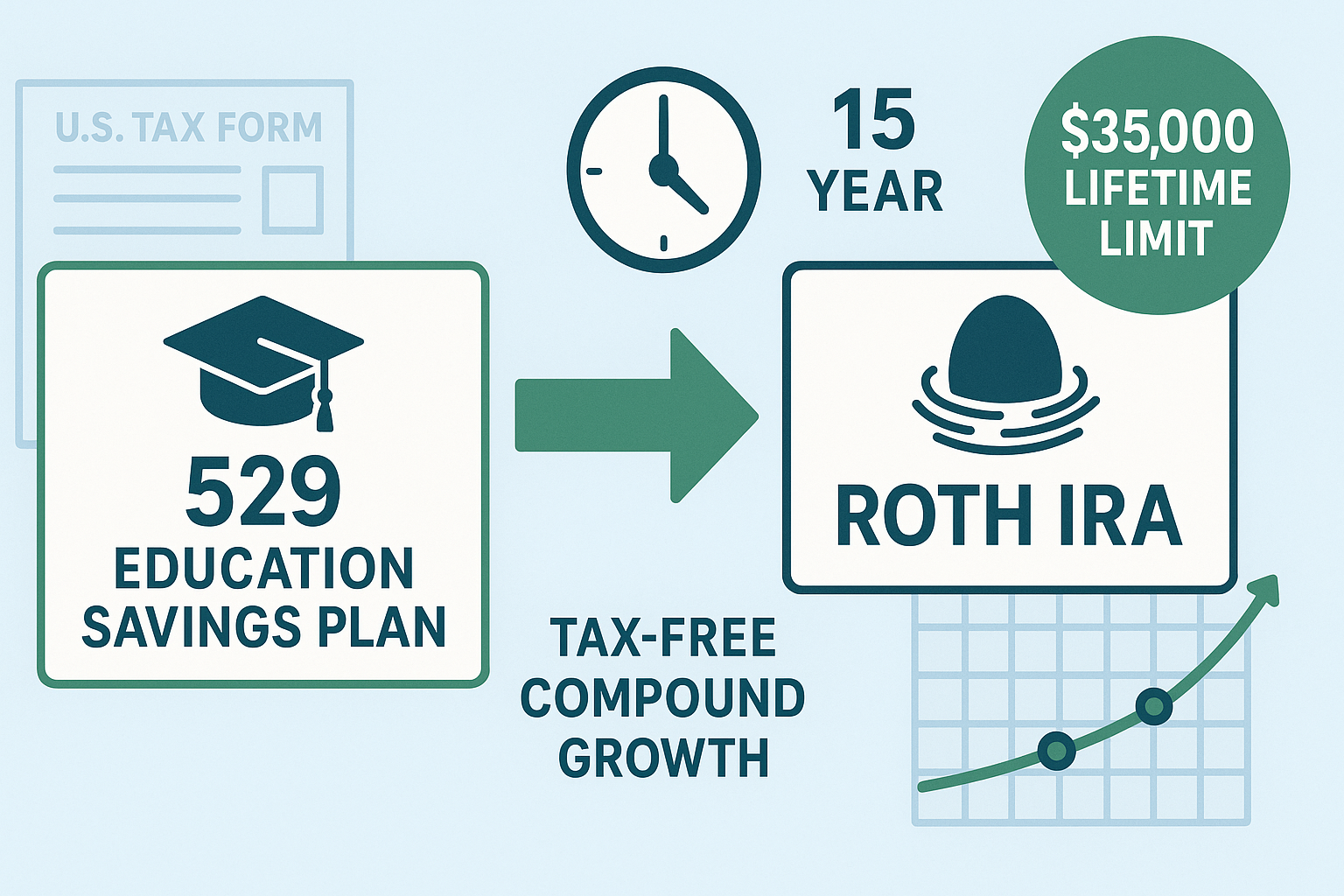
529 to Roth IRA Rollover: Complete SECURE 2.0 Guide for 2026
Read more: 529 to Roth IRA Rollover: Complete SECURE 2.0 Guide for 2026Run the 529-to-Roth IRA rollover cleanly in 2026: the 15-year rule, $35,000 lifetime cap, $7,500 annual limit, the state-tax traps that catch people, and step-by-step execution.
-
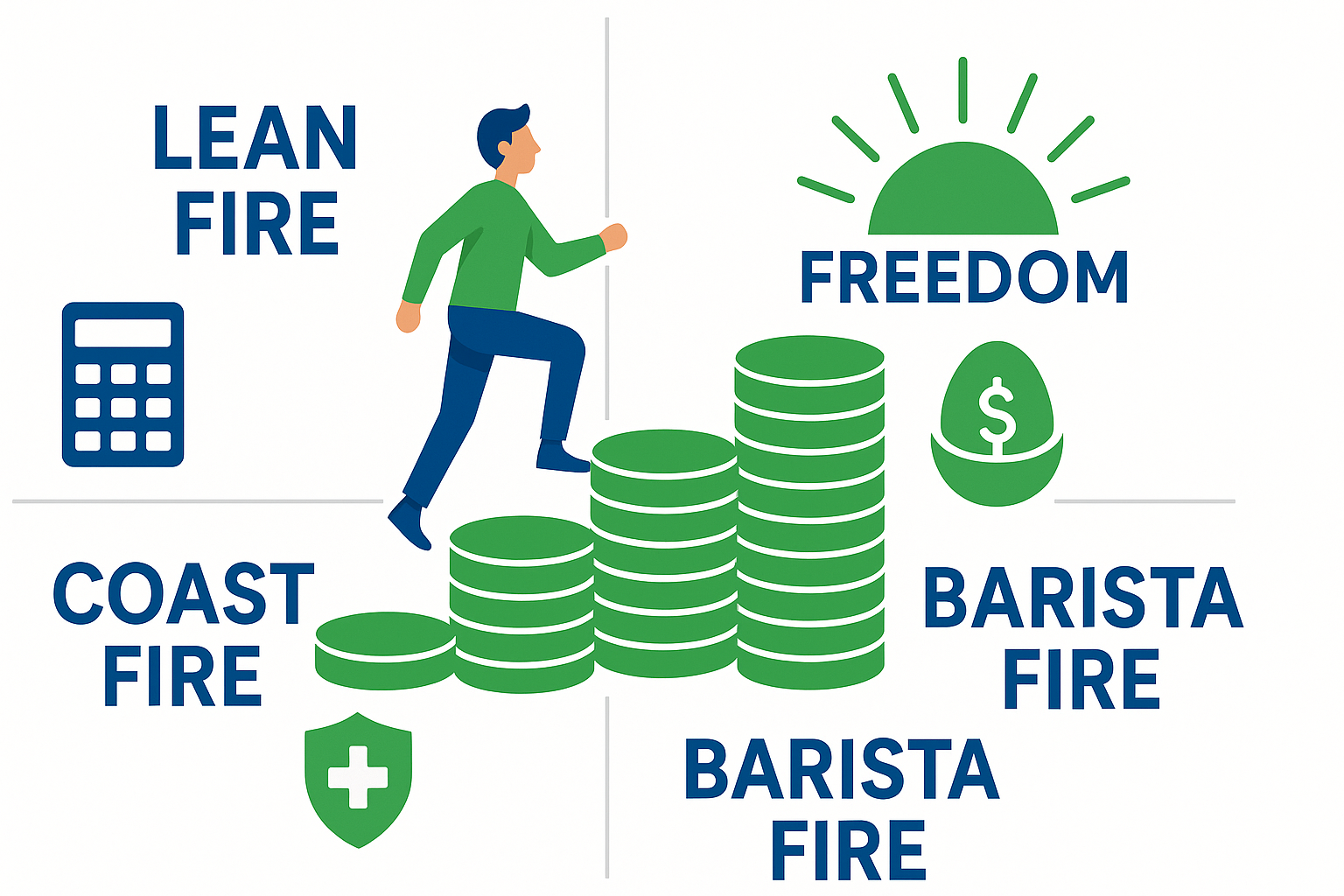
FIRE Movement: The Complete 2026 Guide to Financial Independence and Early Retirement
Read more: FIRE Movement: The Complete 2026 Guide to Financial Independence and Early RetirementFIRE planning in 2026: the ACA subsidy cliff is back, Morningstar lifted the safe withdrawal rate to 3.9%, and the IRS pushed limits higher. FI number, healthcare bridge, Roth conversion ladder, and five interactive calculators.
-

The Complete 401(k) Optimization Playbook for 2026
Read more: The Complete 401(k) Optimization Playbook for 2026Optimize your 401(k) for 2026: contribution limits up to $35,750 for ages 60-63, the mega backdoor Roth at $72,000, the Traditional-versus-Roth call, expense ratios, the new mandatory Roth catch-up for $150K+ earners, plus how to spot a bad plan and what to do at job changes. Built to add six figures to lifetime retirement savings.
-

Backdoor Roth IRA: Step-by-Step Guide (2026)
Read more: Backdoor Roth IRA: Step-by-Step Guide (2026)Income too high for a direct Roth IRA? The backdoor Roth opens the door for high earners at $7,500 a year in 2026 ($8,600 if you’re 50+). This guide walks Fidelity, Vanguard and Schwab step-by-step, runs the pro-rata math, and breaks down Form 8606 line by line.
-

Solo 401(k) Complete Guide for Self-Employed Workers (2026)
Read more: Solo 401(k) Complete Guide for Self-Employed Workers (2026)A Solo 401(k) lets the self-employed contribute up to $72,000 in 2026 ($80,000 if you’re 50+, $83,250 if you’re 60-63), well past what SEP IRAs and SIMPLE IRAs allow. This guide covers eligibility, providers, setup, contribution strategy, mega backdoor Roth, and the SECURE 2.0 Roth catch-up rule with the sole-proprietor carve-out most coverage misses.
Subscribe
Sign up with your email address to receive our weekly news
Latest news
- UK house prices in October 2026: five indices, five different answers
- How to file a CFPB complaint in 2026, and what it can still achieve
- SEC Regulation Crypto Assets: what the proposed rules would mean for investors
- New government and your money: what has changed since July, and what has not
- Triple lock 2030: what changes for the State Pension, and what does not
Categories
- Backdoor Roth (1)
- Cryptocurrency (5)
- Expat Living & Lifestyle (1)
- General Blog (22)
- Index Funds (1)
- Investing Basics (6)
- Investment Guides (6)
- Investment Platforms (1)
- Investment Strategies (16)
- Investments (2)
- IRAs & Tax-Advantaged Accounts (13)
- ISAs and Pensions (7)
- Property Investment (8)
- Real Estate Investing (4)
- Retirement Planning (36)
- Tax Strategy (26)
- Tax-Efficient Investing (8)
- UK Investing (63)
- UK Property Investment (6)